I used to draw like Raphael, but it has taken me a whole lifetime to learn to draw like a child. Pablo Picasso
In the face of difficult situations human beings spontaneously and brilliantly create strategies designed to protect and comfort themselves. Later me find that some of these strategies are outdated and limit our life, but some, like the use of imagination, have a longer shelf life.
As a child I spontaneously developed a capacity for self-soothing. I instinctively found a way to create a safe place in a threatening world. Of course I’d never heard of the amygdala or the pre-frontal cortex. It would be another thirty years before I would read about different ways of triggering the parasympathetic or soothing and contentment’ system, yet I managed in difficult circumstances to resource myself using my imagination to generate alternative realities which provided the sense of safety, warmth and calm I desperately needed.
Meditation teacher Syliva Boorstein says that the mind is like tofu. It tastes of whatever you marinate it in. If the mind is filled with fearful or angry thoughts the taste will be of fear or anger and the body contracted. If the mind is filled with thoughts of safety and ease then the taste and the feeling in the body will be of peace.
Imagining a safe place had physiological benefits enabling my vital signs (heart, pulse rate and blood pressure) to lower and slow while simultaneously enabling the production of oxytocin and endorphins supporting feelings of safety and security. When I felt safe I could physically relax the tension stored in my body and enjoy some brief moments from living in flight or fight mode.
This strategy also helped me psychologically. I spent a significant amount of physical and mental energy scanning for subtle changes in sound, in the body language of those around me and sensing any changes in the emotional atmosphere. When I was trying to predict the next phase of threat or danger my awareness was narrow and tight and sharp like broken glass. Dealing with threat and danger required an intense single-pointed awareness; every sound or move or look had to be registered and analyse. In order to remain ahead of the game I had to develop super-senses which could detect what people would do next almost before they knew themselves! I can really understand paranoia as a way of predicting and protecting ourselves from danger that appears ever-present. This intense scrutiny and scanning for danger displaced the possibility of relaxation and the sense of space and spaciousness this brings.
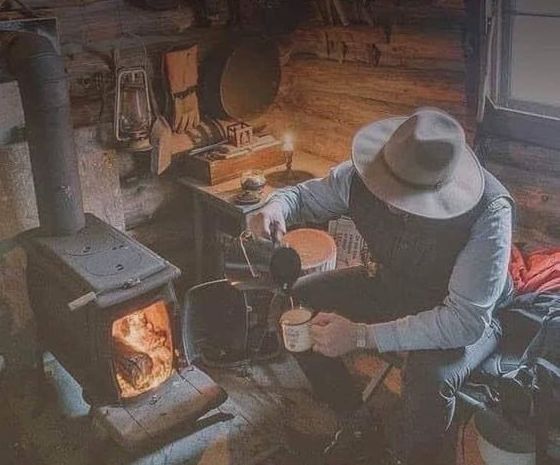
Nevertheless, these tricky conditions didn’t derail my ability to resource myself and find antidotes to stress. Imagining a cabin in the woods wasn’t enough to end my troubles, but it did reveal the human capacity to respond creatively to ever-changing and difficult conditions. This insight gave me another important clue. Yes, things were very difficult but still, there was something else, something that remained buoyant and resilient despite what was happening around me.
Many years later I learnt to meditate and I realised that meditation approaches rather than providing anything additional in terms of resources, instead make visible resources that are always and already present. Meditation acts rather like windscreen wipers, clearing the debris of strategy to one side so that we can see that what we are is more than strategy, more than a series of responses to other people’s actions, more than a set of repeated behaviours, views or ideas.
Underneath the memories of difficult experiences, beneath the strategies we cleverly build in order to deal with them, under the views and the diagnosis and the belief in the permanence of personal damage, lies the still and imperturbable waters of our nature, a nature made from the sad and sorry story of our lives, but a nature that holds all experienes tenderly until such time that we can see what these experiences point to; a nature that quietly and elegantly insists on the bald fact that whatever came and went is not what we are. Understanding my life or my earlier experiences changed my approach to and understanding of meditation. It wasn’t a technique or a faithfulness to a particular method or tradition that would bring about an end to suffering, but a clear seeing of what I already and forever am.
Looking back what is see is the genius of children attempting to abide within the peace and ease of their true nature. I see a creative determination to restore balance and equanimity. I see clearly a force like the pull of moon, working within each and every organism insistently revealing the wholeness, peace and ease that is never lost and never destroyed by the conditions of our lives. Looking back I see that suffering is not the end of peace but a portal to that which is indestructible and ever-lasting.
Without suffering, you cannot grow. Without suffering, you cannot get the peace and joy you deserve. The Buddha called suffering a Holy Truth, because our suffering has the capacity of showing us the path to liberation. Embrace your suffering, and let it reveal to you the way to peace. Thich Nhat Hanh
Colette Power 2016